How louvered pergola drainage works
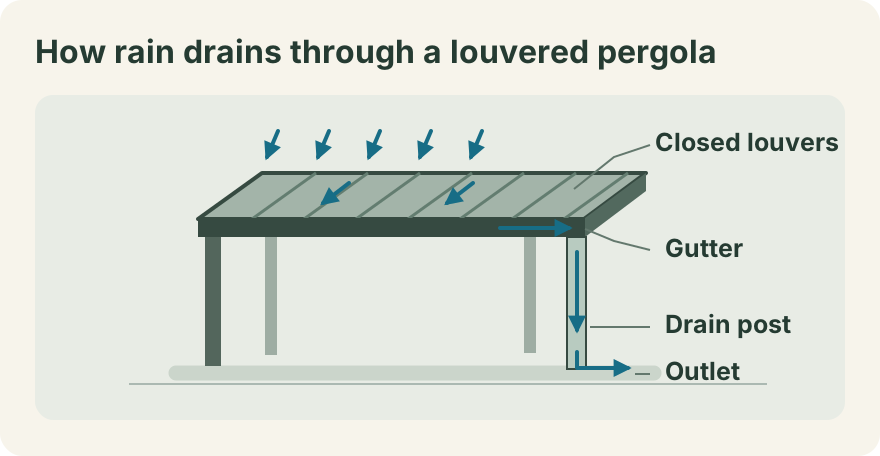
On a system with integrated drainage, closed louvers overlap and guide water toward channels along the roof frame. Perimeter gutters collect the runoff and send it toward one or more outlets. Some systems route those outlets down through designated posts. Get the drainage drawing for the exact layout so you know which posts discharge water and where it goes after it leaves the frame.
Check the outlet locations on the site plan before setting the post bases. A post that drains beside a door, step, or low spot in the paving can leave standing water even when the roof itself drains as designed. For a wall-mounted installation, ask how the installer will detail the junction between the frame and the building.
Where is the water coming from?
Observe where the first water appears. A damp strip along the exposed edge suggests a different problem from a recurring drip at a single blade or a sheet of water spilling over a beam.
- Water enters from the side during gusts. Wind-driven rain can reach seating and appliances under a closed roof. Note the exposed side and how far the wet area extends.
- One spot drips under the roof. With the louvers fully closed, ask the installer to check blade alignment, seals and nearby joints against the installation manual. Moisture spread across the underside on a cool, humid morning can be condensation.
- Water spills over a gutter. Ask the installer to check the outlet and gutter for debris or obstruction and confirm the frame was installed within the manufacturer’s tolerances. Ask about the tested rainfall rate and duration if overflow happens during downpours.
- Water pools at a post. Trace the discharge to the finished surface. A working roof gutter can still empty into a poorly drained area.
What to confirm before ordering
- Roof and gutter layout. Request a section through the closed louvers and gutters, plus a plan showing each outlet for your bay size.
- Rain performance. Ask which configuration was tested, what rainfall rate and duration it handled, and what the warranty covers if there is water ingress.
- Side exposure. Mark the direction rain usually blows from. If you want a side screen, ask what it can do for that opening and when it must be retracted. The screen and structure have their own operating limits.
- Handover. Ask the installer to demonstrate the roof fully closing and check that each outlet drains freely using the manufacturer’s commissioning procedure. Ask how to reach the gutters for cleaning.
Common rain and drainage questions
Does a rain sensor make the roof waterproof?
A compatible rain sensor can signal the motor to close the louvers when it detects rain. Water can enter before the blades close, and the sensor cannot change the roof’s drainage capacity or protect an open side.
Can I put an outdoor kitchen under a louvered roof?
Map where runoff and wind-driven rain could reach the equipment. Check the appliance manufacturer’s outdoor installation, clearance and ventilation instructions when planning the roof and any side panels.
Further reading
Outdoor kitchen owners compare roof coverage and side exposure in this Reddit discussion about pergolas in rain. For an example of how a manufacturer documents drainage limits and rain-sensor operation, see the Renson Camargue user manual.
Plan your project
Planning a louvered pergola? Send your layout for a quote with bay dimensions, mounting type, project location, preferred outlet locations and the sides exposed to wind-driven rain.