Find the opening the afternoon sun comes through
Start in the seat you actually use. Check the patio when glare is worst and look toward the sun from seated height. Note the opening the light passes through and where it lands. Repeat closer to the end of the afternoon. The sun may first come through one bay, then reach the same table through a corner or the next bay as its direction changes.
Take photos from the seating area at both times and mark the furniture positions on a sketch. If you are designing for summer dining or year-round use, account for changes in the sun’s path through the seasons. A west-facing edge is a starting point. The problem can be an opening angled toward the southwest or northwest, depending on the site, season and location.
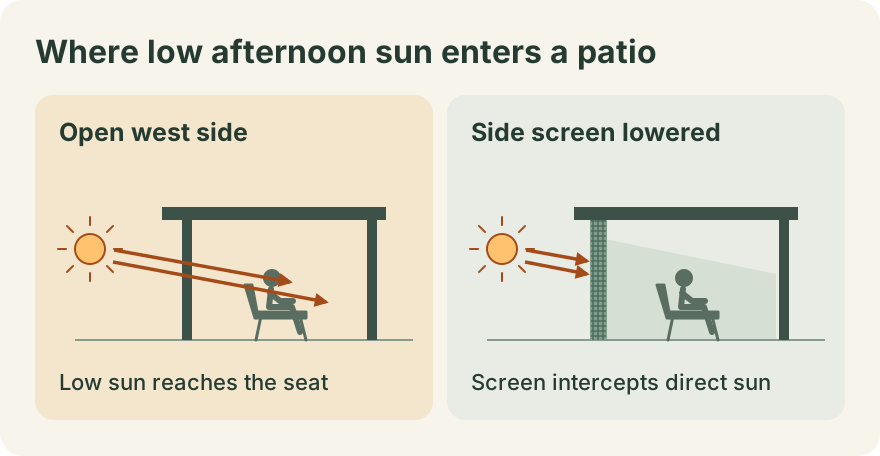
Which shade works for your layout?
- Retractable ZIP screen. Useful when you want to close an exposed opening during dinner and reopen it afterwards. Side tracks hold the fabric edges. Check for suitable mounting surfaces, headroom, and the operating wind limit for the selected fabric and opening size.
- Fixed vertical slats. A good fit when you want permanent screening in one direction. View the layout from the table and from outside. Slat spacing and angle affect both glare control and what you can see through the screen.
- Louvered roof or awning. Useful when the patio needs overhead shade for much of the day. For a roof you also want to use in rain, review its drainage separately. Where late sunlight passes below the beam, pair overhead coverage with a vertical shade on the exposed side.
Start with the bay that affects your seating
Suppose a patio has two open bays on the west side. If only the end bay lets sunlight reach the dining table during the hours you use it, ask for a screen on that bay first. Leave the adjoining opening available for access and airflow. If light comes around the end post later in the evening, check the return opening as well before deciding how much coverage to order.
Walk the route from the house to the yard with the proposed screen lowered in your sketch. Keep the main passage clear. For a screen on an existing pergola, ask the installer to verify the beam and posts can support the cassette and tracks.
Choose fabric for glare, view and privacy
Hold two fabric samples vertically in the problem opening with the afternoon sun behind them. Compare the view from the seat and how much glare reaches your eyes. If you use the patio after dark, make the same comparison from outside with the patio lights on. See the outdoor ZIP screen openness guide for a side-by-side comparison of common meshes.
Further reading
A homeowner describes the low-angle problem in this Reddit discussion about a west-facing patio. The U.S. Department of Energy guide to architectural design explains the same sun-angle issue for east- and west-facing windows.
Plan your project
Compare ZIP screens for pergolas, then send us the opening dimensions and photos. Mark the side where the sun enters, the seating you want to shade, and the openings you use as walkways.